About
About
Solution
SAMS
From Equipment Health Monitoring to Predictive Maintenance, Transform Primary Equipment O&M from Scheduled Maintenance to Risk-Based Management.
Market Overview & Pain Points
Market Overview & Pain Points
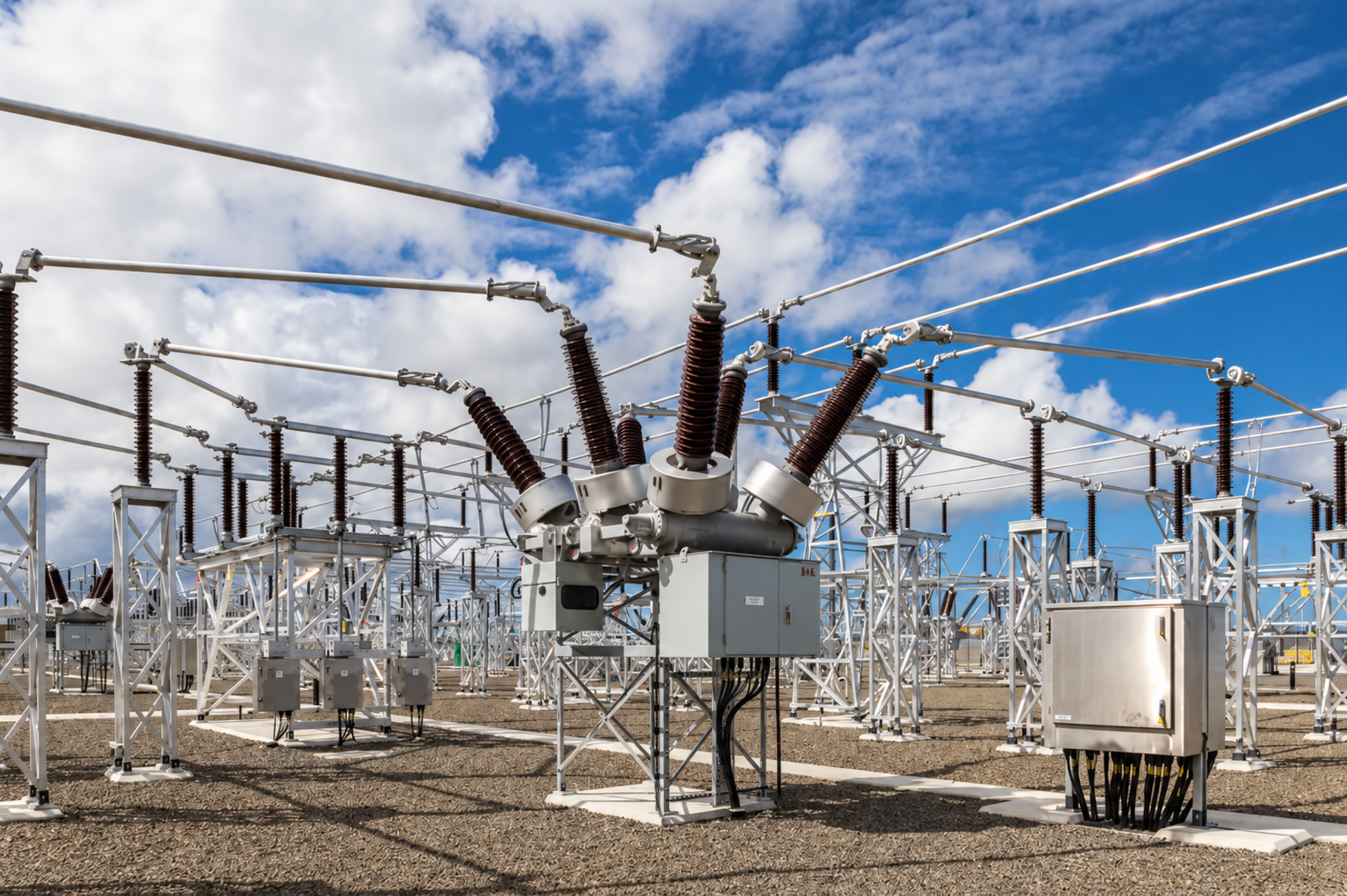
With the continued development of smart substations, renewable energy, and energy storage systems, the operational reliability and lifecycle management of primary equipment, including transformers, GIS, GCBs, power reactors, and STATCOMs, are becoming increasingly important. During long-term operation, equipment health is influenced by factors such as service life, operating conditions, environmental conditions, and maintenance practices. Early identification of equipment deterioration trends and potential risks has therefore become a critical aspect of O&M management.
Traditional maintenance primarily adopts Time-Based Maintenance (TBM), relying on fixed inspection and maintenance intervals, making it difficult to adjust maintenance strategies based on actual equipment health conditions. Furthermore, when equipment histories, monitoring data, and maintenance records are scattered across different systems, the complexity of health assessments, risk prioritization, and maintenance decision-making increases.
As a result, primary equipment O&M is gradually shifting toward Condition-Based Maintenance (CBM) and data-driven decision-making. Through equipment health monitoring, trend analysis, and risk assessment, O&M teams can more accurately plan maintenance, overhaul, and equipment replacement activities, enhancing overall asset management efficiency.

Applicable Object
Applicable Object
Power Utility Dispatch and Substation Maintenance Departments
Energy Storage & Ancillary Service Providers
Large Industrial Consumers & Industrial Parks

EPC Contractors & System Integrators
Renewable Energy Developers
Renewable Energy O&M Service Providers

Pain Points
Pain Points
- Fragmented Equipment Asset and Lifecycle Information: Technical documents, equipment histories, maintenance records, and lifecycle information for primary equipment are scattered across different systems or documents. This makes it difficult to establish a comprehensive asset management framework and increases the complexity of information retrieval, maintenance tracking, and equipment replacement planning.
- Limited Visibility into Equipment Health and Deterioration Trends: Critical primary equipment, such as transformers, GIS, GCBs, and STATCOMs, may gradually deteriorate during long-term operation. Without continuous monitoring of equipment health indicators and trend analysis, O&M personnel may struggle to identify abnormal changes and potential risks at an early stage.
- Scheduled Maintenance Fails to Reflect Actual Equipment Conditions: Traditional Time-Based Maintenance (TBM) relies primarily on fixed intervals for inspections and repairs, making it difficult to adjust maintenance priorities based on actual equipment health and risk levels. This may result in excessive maintenance or delayed intervention for high-risk equipment.
- Challenges in Assessing Cross-Substation Equipment Risks and Maintenance Priorities: When organizations manage large numbers of primary equipment assets across multiple sites, the lack of standardized health scoring and risk assessment mechanisms makes it difficult to compare equipment health conditions, prioritize maintenance activities, and develop equipment replacement and asset investment plans.
Our Solution
Our Solution
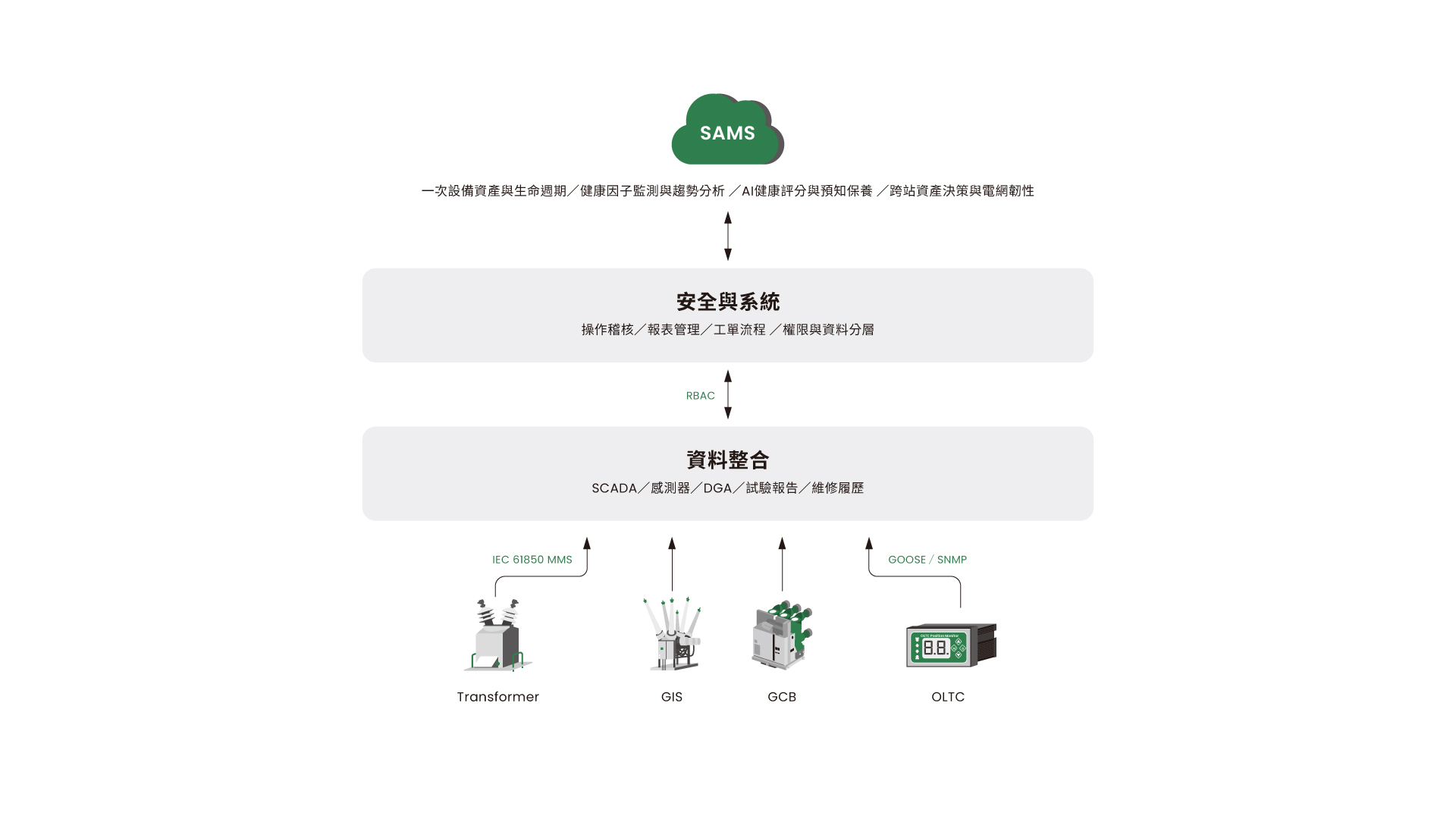
Substation Asset Management System (SAMS) is an AI-powered intelligent asset management system specifically designed for primary equipment in smart substations. It covers critical equipment, including transformers, GIS, GCBs, power reactors, STATCOMs, surge arresters, bushings, and on-load tap changers (OLTCs), enabling organizations to gain real-time visibility into equipment health and operational risks.
The system integrates data from AIoT sensors, SCADA systems, IEC 61850 communications, and equipment histories. Through health scoring, risk analysis, early warning of abnormalities, and trend monitoring, SAMS enables the transition from traditional Time-Based Maintenance (TBM) to Condition-Based Maintenance (CBM).
By leveraging AI-powered analytics, SAMS helps O&M personnel identify potential risks at an early stage, optimize maintenance decisions, and reduce the likelihood of power outages and equipment failures, while enhancing asset reliability, O&M efficiency, and grid resilience.
Features
Features
● Equipment Asset and Lifecycle Management: Centralizes the management of primary equipment assets, including transformers, GIS, GCBs, and STATCOMs, while maintaining comprehensive equipment histories, technical documents, maintenance records, and lifecycle information to establish a standardized, digital asset management framework.
● Equipment Health Monitoring and Trend Analysis: Integrates SCADA, IEC 61850, and sensor data to monitor key equipment health indicators in real time. Through trend analysis and abnormality alerts, the system enables early identification of potential risks and helps prevent unexpected equipment failures.
● AI-Powered Predictive Maintenance and Risk Management: Leverages AI-powered health scoring, risk analysis, and maintenance recommendations to help O&M teams identify equipment deterioration trends and transition from traditional Time-Based Maintenance (TBM) to Condition-Based Maintenance (CBM), enhancing maintenance efficiency and equipment reliability.
● Intelligent Decision-Making and Grid Resilience Management: Combines equipment health status, power supply areas, and grid node information to support cross-substation asset comparisons, maintenance scheduling, equipment replacement assessments, and investment analysis, enhancing grid resilience and decision-making efficiency.
System Architecture
System Architecture