About
About
Solution
IED Manager
Gain Real-Time Visibility into Grid Events and IED Status, Accelerate Incident Analysis, and Transform O&M from Reactive Response to Proactive Prevention.
Market Overview & Pain Points
Market Overview & Pain Points
With the advancement of smart substations, renewable energy grid integration, and power system digitalization, the number and variety of protection relays (IEDs) continue to grow. As equipment data, configuration settings, event records, and maintenance information rapidly accumulate, the demand for cross-device and cross-system integration and management is increasing.
When grid abnormalities occur or protection devices operate, O&M personnel often need to collect event records and fault information from multiple devices and systems, followed by manual data comparison and incident analysis. This process is not only time-consuming but also increases the complexity of event traceability and maintenance management. Furthermore, without centralized management of equipment histories, configuration settings, and maintenance records across multi-vendor IEDs, it becomes difficult to promptly identify equipment abnormalities and track lifecycle status.
As a result, power system O&M is gradually shifting from traditional reactive maintenance toward centralized equipment management, real-time event monitoring, intelligent inspections, and proactive maintenance to enhance incident response capabilities and IED O&M management efficiency.

Applicable Object
Applicable Object

Power Utility Dispatch and Substation Maintenance Departments

Large Industrial Consumers & Industrial Parks

Renewable Energy Developers

Renewable Energy O&M Service Providers

Equipment Manufacturers & Service Providers
EPC Contractors & System Integrators

Pain Points
Pain Points
- Limited Centralized Visibility into Cross-Substation Equipment and Event Information: When organizations manage multiple substations and large numbers of IEDs, equipment status, event alarms, and operational information are scattered across different sites and systems. This makes it difficult for management personnel to gain a comprehensive overview of equipment conditions and events, increasing the complexity of cross-substation management.
- Fragmented IED Asset and Configuration Information: Equipment specifications, firmware versions, protection settings, maintenance records, and lifecycle information are dispersed across different documents and systems. The lack of comprehensive equipment histories creates challenges in version management, maintenance tracking, and equipment replacement planning.
- Heavy Reliance on Manual Inspections for Equipment Abnormalities: Traditional maintenance relies heavily on periodic inspections and manual assessments, making it difficult to detect potential equipment abnormalities and deterioration trends at an early stage, limiting the transition from scheduled maintenance to proactive maintenance.
- Insufficient Tracking of Fault Reporting and Repair Progress: When equipment abnormalities occur, the lack of centralized management of fault reports, repair progress, and maintenance records can lead to information gaps, making it difficult to track fault resolution processes and accumulate maintenance knowledge.
- Fragmented Grid Event Information and Time-Consuming Incident Analysis: When protection relays operate or grid abnormalities occur, Sequence of Events (SOE), alarms, and equipment event information may be scattered across multiple systems. O&M personnel must manually collect and compare data, increasing the time required for root cause analysis and event traceability.
- Delayed Delivery of Critical Event Information: Following a fault, delays in providing relevant personnel with fault waveforms, SOE records, and critical alarm information can prolong cross-departmental communication and incident resolution, reducing overall emergency response efficiency.
Our Solution
Our Solution
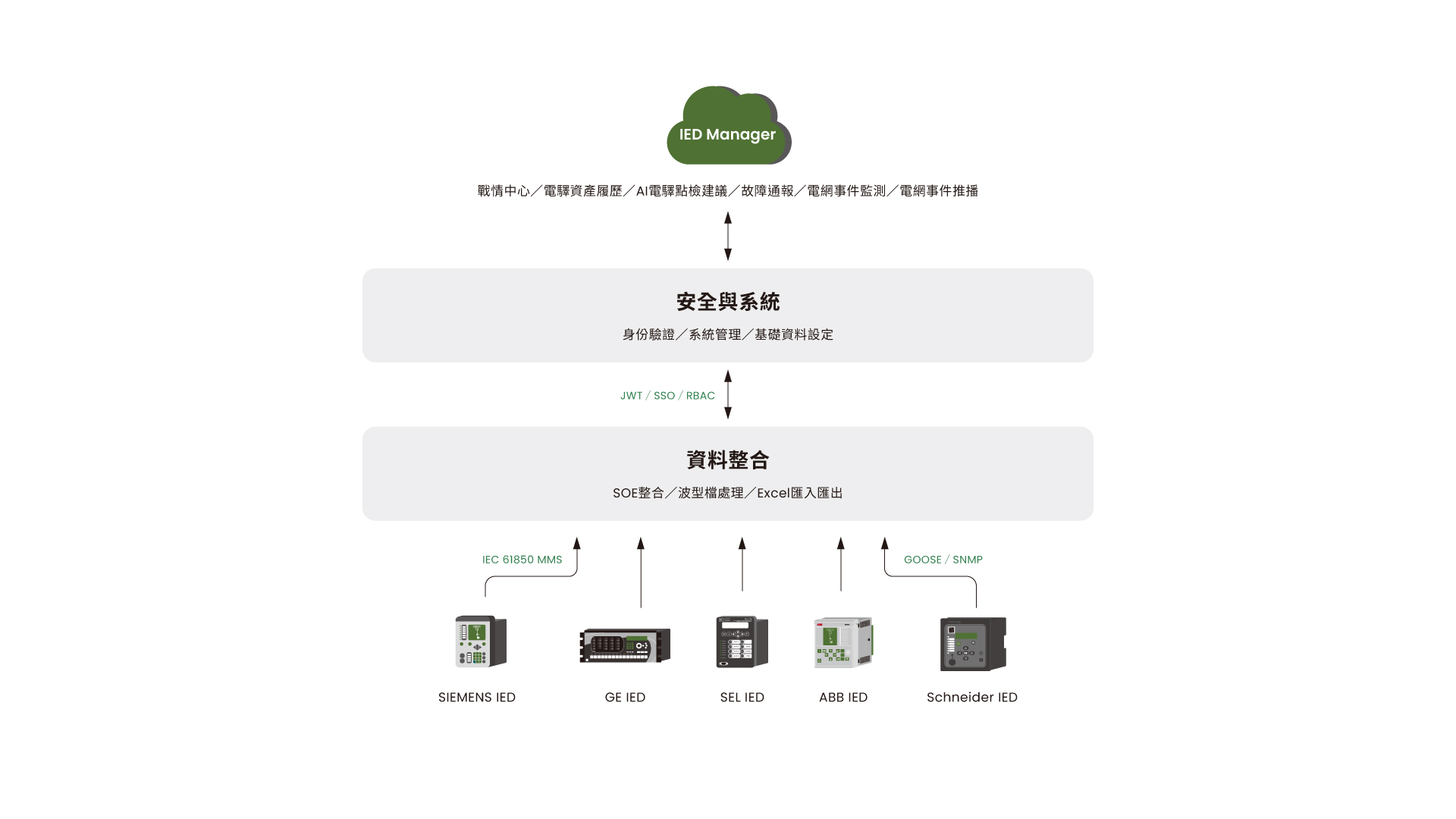
IED Manager is an intelligent management system specifically designed for smart substations and protection relays (IEDs), integrating equipment monitoring, event alarms, AI-powered inspections, fault reporting, and real-time notifications.
The system enables centralized management of multi-vendor IEDs, automatically monitors equipment status, protection settings, and firmware versions, and leverages AI to analyze equipment health data, identify potential abnormalities at an early stage, and support preventive maintenance.
When grid abnormalities occur, IED Manager rapidly collects Sequence of Events (SOE), fault waveforms, and event records while instantly notifying relevant personnel, accelerating incident analysis and power restoration.
IED Manager enables organizations to transition from reactive maintenance to proactive management, enhancing O&M efficiency, reducing downtime risks, and strengthening power supply stability and grid resilience.
Features
Features
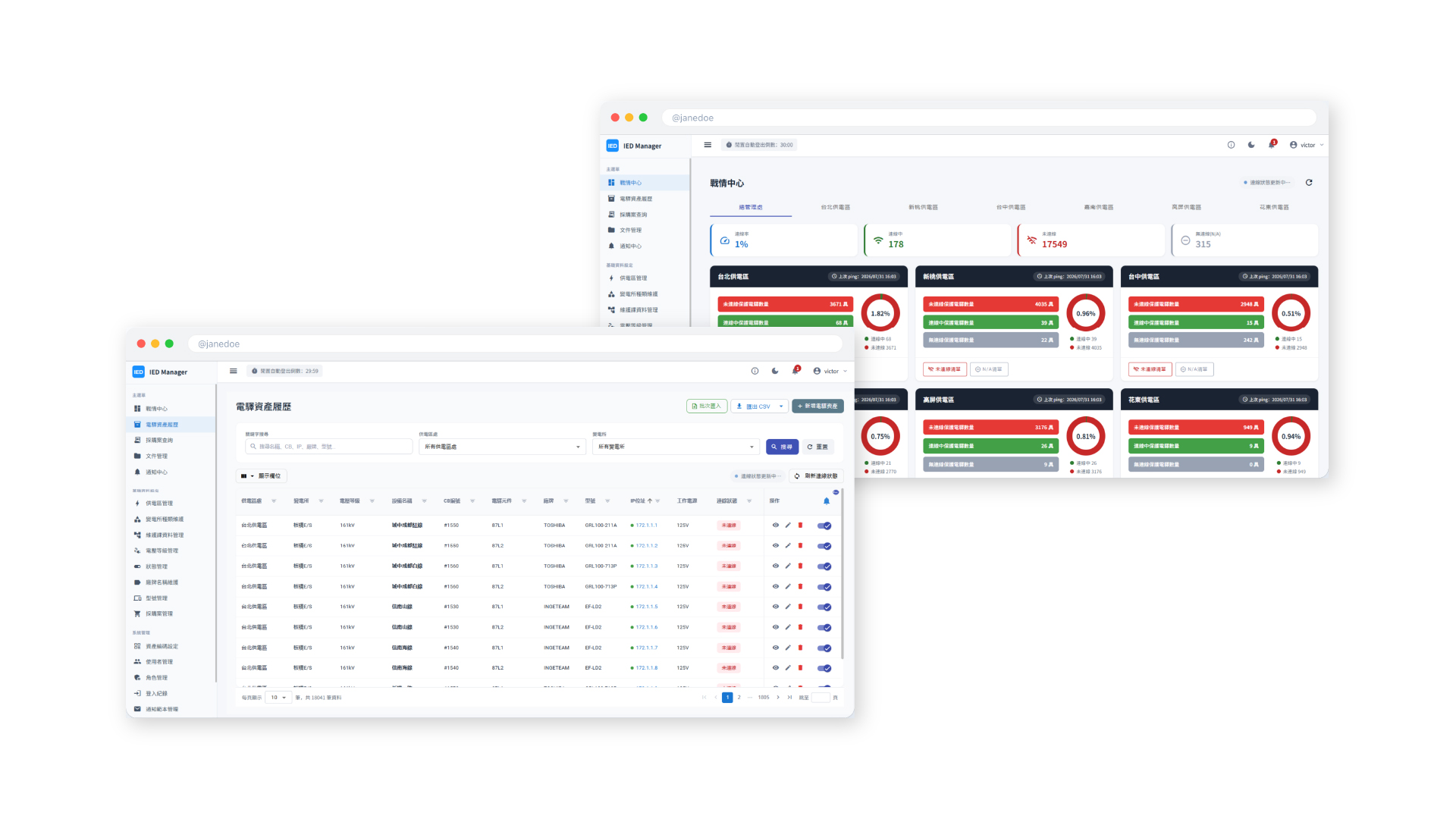
● Operations Dashboard: Integrates GIS maps, real-time alarms, and key operational indicators to provide centralized visibility into the operational status of substations, enabling rapid detection of abnormalities and improved management efficiency.
● Protection Relay Asset History Management: Maintains comprehensive records of equipment data, firmware versions, protection settings, lifecycle information, and maintenance histories, establishing a foundation for digital protection relay asset management.
● AI-Powered Intelligent Inspections: Leverages AI to analyze equipment health data, automatically identify potential risks, and provide inspection recommendations to enable preventive maintenance management.
● Fault Reporting and Repair Management: Supports QR code-based mobile fault reporting, repair workflow tracking, and historical record management, reducing fault reporting and repair processing times.
● Grid Event Monitoring: Collects Sequence of Events (SOE) and protection relay event information in real time, enabling rapid identification of fault causes, equipment operations, and incident progression.
● Real-Time Grid Event Notifications: Automatically delivers fault waveforms, SOE information, and critical alarms to designated personnel, facilitating timely incident analysis and power restoration decisions.
System Architecture
System Architecture
System Interface
System Interface