About
About
Solution
Project Execution & Process Solution
Minimize Execution Risks, Ensure Quality and Schedule Control, and Deliver Projects on Time.
Market Overview & Pain Points
Market Overview & Pain Points
Energy, power, and automation projects typically involve multiple equipment types, system interfaces, engineering designs, and on-site construction activities, requiring close collaboration among project owners, equipment suppliers, engineering teams, and system integrators. As project scale and system integration complexity increase, project management goes beyond schedule control to encompass requirements management, technical interface coordination, equipment delivery schedules, engineering quality, and acceptance criteria.
From initial planning and design to procurement, installation, and testing, insufficient verification at any stage may affect subsequent activities, leading to design changes, on-site rework, project delays, or acceptance issues. Therefore, establishing a comprehensive and standardized project execution process is essential to minimizing project risks, maintaining quality and schedule control, and ensuring successful project delivery.

Applicable Object
Applicable Object

Power Utilities & Transmission and Distribution

Renewable Energy Owners & Developers

Energy Storage & Ancillary Service Providers

Large Enterprises & Industrial Parks

Campuses & Disaster Resilience Facilities

EPC Contractors & System Integrators

Power Equipment Manufacturers & Service Providers

Pain Points
Pain Points
- Unclear Initial Requirements and Risks: Energy, power, and system integration projects involve multiple equipment types, system interfaces, and construction conditions. If project requirements, responsibilities, and technical interfaces are not clearly defined during the initial phase, unresolved issues may carry over into the design and implementation stages, resulting in design changes, equipment modifications, or on-site rework. These challenges can increase project costs and execution risks.
- Challenges in Quality and Schedule Control: From design and procurement to equipment delivery, on-site construction, and testing, each project phase is closely interconnected. Delays or quality issues at any stage may affect subsequent activities. Without clearly defined processes, milestones, and verification mechanisms, projects may face communication gaps, schedule delays, and difficulties in maintaining consistent quality control.
- Increased Acceptance and Delivery Risks: During the final stages of project implementation, system integration, Factory Acceptance Testing (FAT), Site Acceptance Testing (SAT), issue resolution, documentation handover, and personnel training must be completed. If testing standards, acceptance criteria, and handover requirements are not clearly established in advance, projects may experience repeated acceptance procedures, delivery delays, and challenges in transitioning to ongoing operation and maintenance (O&M).
Our Solution
Our Solution
Energy, power, automation, and system integration projects often involve multiple equipment types, system interfaces, construction conditions, and cross-functional collaboration from solution planning through implementation. Beyond comprehensive technical planning, effective execution and mature project management mechanisms are essential to managing risks, quality, and schedules, ensuring seamless transitions between project phases and on-time delivery.
From requirements confirmation, design and procurement, and equipment delivery schedules to system integration, on-site construction, testing, and verification, every stage of a project is closely interconnected. Inadequately defined requirements, insufficient interface integration planning, or ineffective coordination of equipment deliveries and construction schedules may lead to design changes, project delays, increased costs, and greater delivery risks.
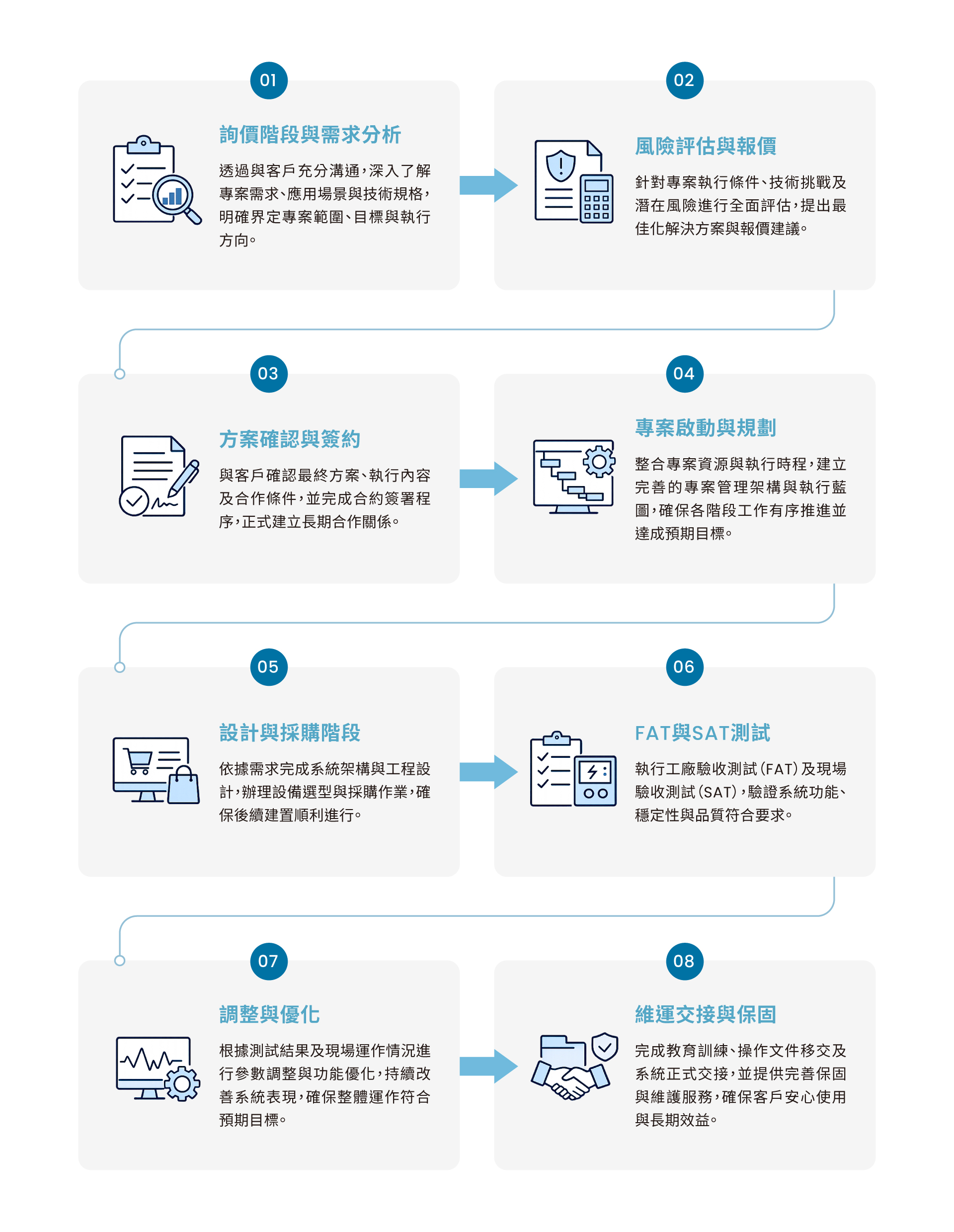
To minimize uncertainties throughout project execution, Intelligent Cloud Plus (ICP) has established a comprehensive project execution and management framework covering the entire project lifecycle. From requirements analysis, risk assessment, and solution confirmation to project planning, design and procurement, installation and testing, system adjustments and optimization, and operation and maintenance (O&M) handover, ICP implements standardized processes, phased reviews, quality verification, and comprehensive documentation management to systematically monitor critical activities and risks at every stage.
Through systematic project management, ICP enables early risk identification, proactive issue resolution, and continuous monitoring of project quality and progress. This approach minimizes the risks of design changes, schedule delays, and construction modifications, ensuring that complex system integration projects remain transparent, manageable, and reliable from initial planning and execution through final delivery.
Features
Features
● Minimize Project Execution Risks: From requirements clarification and risk assessment to solution confirmation, Intelligent Cloud Plus (ICP) identifies potential risks related to technical specifications, system interfaces, equipment, and construction during the early project stages. By proactively developing mitigation measures, ICP minimizes design changes, rework, and uncertainties throughout project execution.
● Ensure Project Quality and Schedule Control: Through standardized processes, milestone management, and phased reviews, ICP continuously monitors progress across design, procurement, installation, and testing. Verification procedures, including Factory Acceptance Testing (FAT) and Site Acceptance Testing (SAT), help ensure that system functionality and engineering quality meet project requirements.
● Ensure Successful Project Delivery: From system integration, testing, and verification to personnel training and operation and maintenance (O&M) handover, ICP systematically completes acceptance procedures, documentation, and project deliverables. This ensures that systems meet specified requirements and acceptance criteria, minimizes delivery risks, and facilitates a seamless transition to ongoing operation and maintenance.
Project Execution & Process
Project Execution & Process